
Who’s caring for the carers and carers-in-training?

South Africa’s healthcare workers spend big parts of their day keeping other people alive – and it’s costing them. New data from Discovery Health shows that one in seven of its members were actively receiving treatment for a mental health condition in 2024. That’s nearly double the rate recorded in 2012.
Among doctors specifically, the picture is starker still: medicine remains one of the only professions where the people trained to save lives are more vulnerable to mental health challenges.
It isn’t a mystery why. The same instincts that make a good doctor – self-sacrifice, stoicism, the reflex to put the patient first – are precisely what make it hardest for healthcare workers to admit when they are struggling. Focusing on our doctors in training this year, we noticed that the same holds true for many students at South African medical schools. Medical students admitted to feeling pressurised in certain situations and reported high anxiety levels during clinical training.
Ithemba’s #CrazySocks4Docs campaign – premised on the Australian campaign with the same name – was built to interrupt this: a small, visible, slightly ridiculous act of solidarity that gives permission for a much harder sentence – “I’m not okay” – to be spoken out loud.
Meta’s $567 million reckoning – and why it matters in South Africa too

A New Mexico court has just done something no ruling has done before: hold a social media giant financially and legally responsible for a youth mental health crisis. Meta has been ordered to pay $567 million into a teen mental health fund and to overhaul how Facebook and Instagram function for young users, after a judge found the platforms had knowingly used addictive design – endless scrolling, autoplay, relentless notifications – to keep teenagers hooked, while failing to protect minors from sexual exploitation. New Mexico's Attorney General didn't mince words: this is “not just a judgment against one company,” he said. “It is a blueprint.”
It’s a US ruling, but the platforms, the features and the age group are the same ones shaping South African teenagers' daily lives. Our own data is already flashing the same warning lights. Local claims data shows under-24s are the fastest-growing group for self-harm-related mental health claims in the country, rising nearly twice as fast as older age groups. The tools driving harm abroad are the tools our own children are using every day.
This story matters to Ithemba's mission not because we work in litigation, but because it names, in hard legal language, something families and clinicians have been saying for years: the design of the platform is not a neutral backdrop to a young person's mental health – it’s an active ingredient.
The 90% gap: why awareness isn’t the same as access

An estimated one in three South Africans will be diagnosed with a mental health condition at some point in their life. Roughly a quarter of our population is living with depressive symptoms right now. And yet more than 90% of South Africans with a diagnosable mental health condition never receive any formal care at all.
That gap is the real story behind raising awareness. Talking about mental health more openly matters – but conversation alone doesn't get someone a psychiatrist appointment, a support group, or a hospital bed when they need one. South Africa has just 0.31 psychiatrists and fewer than one psychologist per 100,000 people, concentrated overwhelmingly in a handful of provinces. For most South Africans, the barrier was never stigma alone – it’s supply.
This quarter, we want to shift the awareness conversation from “talk about it” to “here’s what access actually requires”: more trained practitioners, better funded public mental health services, and stronger links between community-level support (support groups, helplines, and peer networks) and the clinical care people are formally entitled to. Awareness got us permission to talk. Now the work is building somewhere for that conversation to go.
The mushroom in the room – South Africa's first psilocybin trial for depression
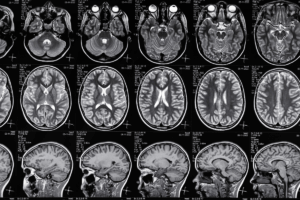
For people with treatment-resistant depression – the kind that doesn't respond to standard antidepressants – the options have historically run out fast. That's starting to change, and some of the most interesting work isn't happening in London or California. It's happening in Cape Town.
Stellenbosch University's Department of Psychiatry, led by Professor Soraya Seedat, partnered with research organisation TASK to run South Africa's first clinical trial testing psilocybin – the active compound in "magic mushrooms" – as a treatment for depression, delivered under full clinical supervision alongside talk therapy. It's a double-blind, Phase 2 study specifically focused on HIV-positive women, a group carrying an unusually heavy and under-studied mental health burden, and it makes South Africa one of the only places on the continent running trials of this kind.
The broader science backing this up has kept building. Globally, psilocybin-assisted therapy is now one of the most closely watched areas in psychiatry, with a 2026 review in Nature Medicine pointing to genuine momentum across major depressive disorder, PTSD and substance-use disorders. It's not a cure-all, and researchers are careful to say so – patient selection and supervision matter enormously, and it remains firmly investigational, not something to try outside a clinical setting. But for people who've run out of options with conventional treatment, that supervised, evidence-based middle ground – not experimentation, not folklore, but rigorous clinical trial – is exactly what's been missing.
It's a reminder that the future of depression treatment isn't only about closing the access gap with what already exists. Sometimes it's about finding something that works better in the first place – and that work is already under way here.